Friday, January 23, 2015

Eye Care Emergencies


Everybody has accidents. Either we are in a hurry or we aren't paying attention or someone else is doing the same and we suffer the consequences. We just have to accept that accidents happen and deal with them accordingly. With eye injuries the accident and how we deal with it can effect our vision, which is kind of a big deal.

We certainly can’t touch on every possible scenario in this blog but we can cover some of the basic types of eye care emergencies. In major emergencies, of course, call 911. In these scenarios do the best you can to minimize further injury and take the injured to the emergency room or urgent care.

If a blunt or sharp object cuts your eye or eyelid:

  • Tape or cover the eye with an object such as a paper cup.
  • Don’t flush the eye with water or any fluids.
  • Don’t try to remove the object if it is still in your eye.
  • Don’t eat or drink anything.
  • Go to the emergency room!

If you receive a blow to the eye:

  • Go to the emergency room immediately if you have increased pain, decreased vision, or a black eye.
  • If you are certain that your eyeball isn't injured you can use a cold compress to reduce swelling, but don’t put pressure on the eyeball.
  • Even if your eyeball doesn't appear injured see an eye doctor to make sure.

A chemical splashes into your eye:

  • Rinse your eye with tap water for 15 minutes to try to flush out the chemical.
  • If you are wearing contact lenses do not try to remove them, you may do worse damage.
  • After eye flushing go to the emergency room!

A speck of something in your eye:

  • Pull your upper eyelid gently away from your eyeball to see if speck falls out.
  • Don’t rub your eyes, you may push the speck in further.
  • Let your eyes do the work-let your tears wash it away.
  • If eye irritation persists see an eye doctor.

The overall theme here is if you injure your eye and you feel the pain is getting worse and your vision too, get to the emergency room.

At Vision Pro we care about your vision. Please feel free to call or stop in to set up an eye care appointment today!

Friday, January 2, 2015

Vision Pro’s Style of the Month


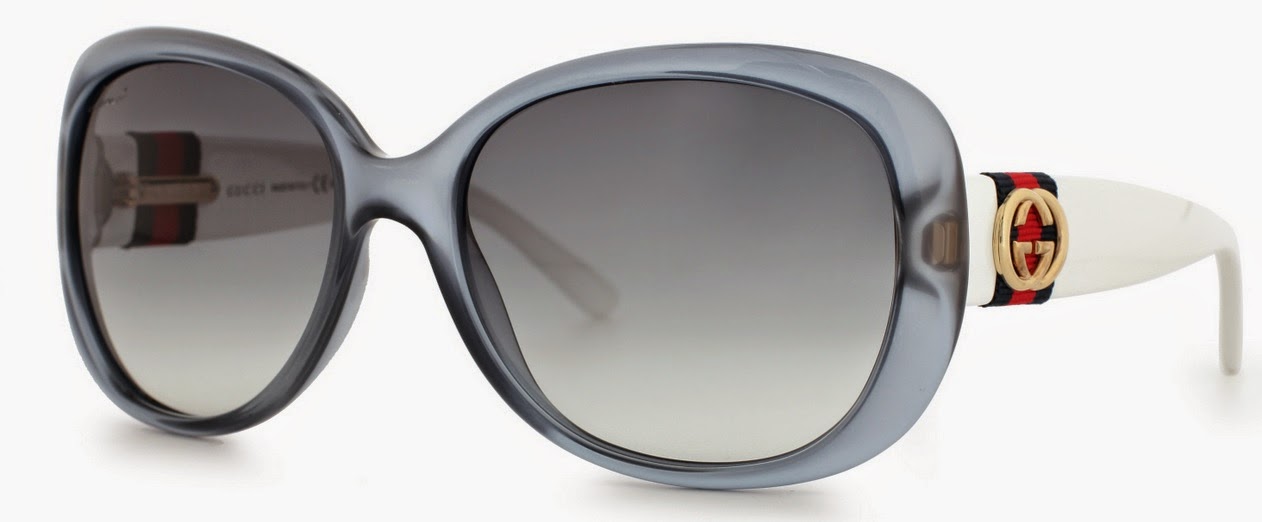
Alright ladies, this style of the month is for you! Do you ever find yourself wiping away cosmetics and sweat from your sunglasses? Well now you don’t have to! Gucci’s GG3644/S sunglasses are built with a hypoallergenic, making the shades resistant to make-up and sweat. How cool is that? These sunglasses have an oversize oval shape featuring the Gucci logo on the temple. These are available in different colors and lenses. Whether you’re trying to make a fashion statement or driving your car, these Gucci shades will make you look great and see better. You don’t have to worry about a glare because these sunglasses are made 100% UVA/UVB protection! And who doesn't love presents? If you buy a pair of these Gucci sunglasses, you will also receive a cleaning cloth and protective case! Check them out ladies, it’s time you treat yourself with a designer look. If there are further questions regarding prescription lenses, please feel free to contact us. We will be glad to help!


Friday, December 19, 2014

Children and Contact Lenses: Is Your Child Ready?


Perhaps your child wears glasses and wants to switch to contacts. Maybe your child was just diagnosed with the need for corrective lenses and he or she wants to wear contact lenses, but you aren’t sure they are ready. These scenarios, and others like it, raise the question: at what age are children ready for contacts?

Every child is different as is every situation, so there is no correct age set in stone. There are however, several factors to consider when deciding if your child is ready for contacts.Physically, most children’s eyes can tolerate contact lenses at a relatively young age so you are looking more at factors such as maturity and responsibility, personal hygiene, their main activities, and self-esteem.

Maturity and responsibility 

Studies have shown that over 90% of children ages 8 through 11 have no problem putting in or taking their contacts, and keeping up with proper maintenance. It’s really about your child’s maturity level and how responsible they are. Does your child perform their chores and homework in a timely and orderly fashion? If not they may not be ready for contacts yet, if so they are a great candidate.If your child can be responsible enough to follow the doctor’s instructions in how to care for and maintain their contacts then they are ready.

Personal Hygiene

This is very much related to maturity and responsibility. If your child can’t keep their room clean and needs to be reminded to shower or take a bath they might not be ready for contacts just yet. If they are clean and orderly then that’s another story.In regard to personal hygiene and preventing infections, make sure your child knows:

  • Not to share or swap contacts
  • To never use saliva, tap water, distilled water, or anything other than sterile saline solution for storing contact lenses.
  • Use hypoallergenic skin products and cosmetics marked "for contact lens wearers" or "for sensitive eyes
  • For girls: remember to apply make up after applying contacts


Your Child’s Activities: Sports

If you child is active then contacts may be a better option than glasses. Face it: contacts are better for sports than glasses. If your child is responsible and is involved in sports then your child should be ready for contacts. Contact lenses also provide better peripheral vision which allows for better awareness and performance.

Self-esteem

Many children would prefer not to wear glasses to school, at events, or many places where their peers are present. Children are very self-conscious about looking different or standing out. Wearing contacts can help boost their self-esteem and this will likely spill over into their studies, relationships, and over all well-being.

If you think your child is ready for contacts call us today to set up an eye appointment!

Friday, December 5, 2014

5 Bad Habits That Are Prematurely Aging Your Eyes


Do you love your fast food? Staying up late? Smoking? We all have vices and many of us can laugh them off. However, some of our bad habits can affect our eyesight and leave us with poor vision or blindness much earlier in our life than expected.

The following are several bad habits that are aging our eyes:

Smoking

This shouldn’t be that much of a surprise since smoking can negatively affect many aspects of our health. Smoking cigarettes can your increase your risk for optic nerve damage, macular degeneration and developing cataracts. All of these conditions can cause eventual vision loss.

Poor Nutrition

Eating lots of junk food and fast food while not consuming enough fruits and vegetables can leave your body lacking the essential vitamins and minerals necessary for healthy eyes--not to mention lack of anti-oxidants. You need a well-balanced diet to obtain essential vitamins and minerals as well as anti-oxidants. You also need fatty acids that are in foods such as fish and olive oil for optimum eye health.

Soaking Up the Sun without Sunglasses

Sunglasses protect your eyes from UV light, any sunny day, any month of the year. They also protect your eyes from Blue light, which is important since long term exposure to the blue and violet lights of the solar spectrum can lead to macular degeneration.

Wear those shades: look good and feel good!

Not Being Hydrated

The American Medical Association recommends that you consume at least 8 glasses of water a day for optimum health. If you don’t keep adequately hydrated your eyes may not be able to produce the necessary tears to keep your eyes moist and properly nourished. Since your tears carry nutrients to the cells on the surface of the eye and carry antibodies to prevent infection, being properly hydrated is key to maintaining healthy eyes. So drink up!

Poor Sleeping Habits

Obviously not getting enough sleep can wreak havoc on the body and age you faster. For your eyes, not getting a good night’s rest can cause puffy, bloodshot, and dry eyes. The long term effects of not getting enough sleep can potentially damage your optic nerves and lead to impaired vision

If you engage in any, or several, of the bad habits discussed above, then eliminating them will go a long way in optimizing your eye (and overall) health. Keeping up with regular eye exams can go a long way too!

If you would like to set up an appointment to discuss optimizing your eye health or are due for an eye exam please give us a call today!

Monday, November 17, 2014

Potential Causes of Eye Twitching


Are you getting funny looks because people think you are winking at them? Are they wondering if you are some kind of shady dealer because after you say something you end with a wink?

Eye twitches can be annoying and at the very least be the source of insecurity in social situations. So what causes them and are they a health concern?An eyelid twitch, referred to as a blepharospasm by eye care professionals, is an involuntary and repetitive spasm of the eyelid muscles. They are often mild and feel like a gentle pulling on the eyelid.

In most cases eyelid twitches are a result of everyday life, from external things to diet and lifestyle.

The following have been known to cause eye twitches:

  • Alcohol
  • Caffeine
  • Fatigue and or lack of sleep
  • Bright lights
  • Smoking
  • Stress
  • Irritation of the eyes or eye strain
  • Side effects of medication


Luckily, you can control most of the causes above by what you put into your body. By altering the amount of alcohol or caffeine consumed your eye twitch will likely dissipate on its own. The same can be said for cutting back or quitting smoking and trying to improve your sleeping patterns. Additionally, limiting your time staring at computer or televisions screens, which can cause eye strain, could help to alleviate the problem.

In some rare instances, eyelid twitches can be a sign of certain brain and nervous system disorders. If an eye twitch is a predecessor to a chronic illness it is always followed up by other symptoms. Illnesses with symptoms that include eye twitches are as follows:


  • Multiple sclerosis
  • Bell's palsy
  • Cervical dystonia
  • Dystonia
  • Tourette syndrome
  • Oramandipular dystonia and facial dystonia
  •  Parkinsonism


If you have had an eye twitch that has been persistent and have other associated symptoms contact your physician. If you have been experiencing persistent eye twitches please feel free to set up an eye exam with us today!

Tuesday, November 4, 2014

Keeping an ‘Eye’ on the Kids: Children’s Eye Exams

https://blogger.googleusercontent.com/img/b/R29vZ2xl/AVvXsEhm7UXRSShqccT7oO__G6WwYI8hgCDMC25LYbftjQC7YpNeyquIB1CMCt0iRisAnw5GdMnie-PCQUZLisQed1YsvOKuyQ6EMgo0vD14GNkXErKrj9ubiwEYr8FyufHl_hNNgiUwQ_FoSRuh/s1600/shutterstock_64244332.jpg


As a parent of an infant you may wonder at what age should I take my child in for an eye exam and how often after that? Is it really that important when they are so young? Taking your child in for an eye exam is important because it allows eye care providers a chance to diagnose the onset of any vision problems early in a child’s life. Early diagnosis can lead to more effective treatments as young children are more responsive to treatments than adults.

According to the American Optometric Association (AOA) 5% to 10% of preschoolers have vision problems and 25% of all school aged children do as well. Early diagnosis can help your child not fall behind and have a happy, well-adjusted life.Additionally, early eye exams are important for children’s ability to learn. The basic skills below are directly related to a child’s ability to learn:


  •  Hand-eye coordination
  • Ability to focus 
  • Near and distant vision
  • Binocular (two eyes) coordination
  • Eye movement skills
  • Peripheral awareness


The AOA recommends that infants receive their first eye exam at 6 months of age. After this, children should receive eye exams at age 3, and around ages 5 or 6 (or just before they enter first grade). School aged children who don’t have any vision problems should get an eye exam every two years, and those with glasses or contacts annual visits are recommended.

Eye exams vary on the age of your child but typically eye exams for children focus on the following: family and case history, standard vision testing, eye health evaluation, and to determine if your child needs any vision correction, such as glasses.

If your child is ready for their first eye exam, is about to enter first grade, or is due for an eye exam feel free to give us a call to set up an appointment today.

Monday, October 20, 2014

Goodbye to Dry Eyes!

An estimated 20 million Americans suffer from dry eyes. That is a lot of people, enough to make you want to cry…unless of course you can't because you have dry eyes. If you suffer from dry eyes don’t fret there are treatments, something we will discuss.

First off: what are dry eyes and why is it a concern?

There are several reasons why it is important for your eyes to maintain enough tears to coat the surface of your eye. These tears serve a protective function:

  • wash away debris such as bacteria, various microorganisms, allergens, and any chemicals that come in contact with your eye
  • tears carry antibodies to prevent infection
  • tears carry nutrients to the cells on the surface of the eye


So you can understand that tears serve many functions to help provide you with healthy vision. This is also why concerns about dry eyes are more than just dealing with discomfort.

Causes
Dry eyes can be caused by a variety of conditions. In certain cases the lacrimal gland can be damaged and affect the eye’s ability to secrete tears. Certain medical conditions such as lupus and sarcoidosis can inflame the lacrimal gland.

In other scenarios, the side effects of medications, taken for non-eye related conditions, can cause dry eyes. Many medications will list dry eyes as a possible side effect.

Dry eyes can also be caused by abnormalities of the lipid layer of the tear film. What happens then is that oil glands get plugged up (a condition known as blepharitis) and can’t properly secrete the oily layer of tears that prevents evaporation.

Treatments for Dry Eyes

*First and foremost: see an optometrist or eye care specialist

*Artificial tears or preservative free artificial tears (if you use more than 4 times a day)

*Lubricating gels or ointments—best used before bedtime

If you are having problems with dry eyes or any eye care issues please feel free to call Vision Pro today to set up an eye exam with one of our optometrists. We take pride in helping you maintain healthy vision!